Saturday, 8 September 2018

The Grand Tour - Part 3 - Cajamarca to Chachapoyas

After breakfast I headed towards Los Banos del Incas again, which was on the way out of Cajamarca. They have set up a one-way system as at time traffic to the thermal springs is heavy, but a typical problem in Peru is that they then seem to forget that motorists need to know how to get out of the one-way system, so without any signs I had to guess which road I needed to take! But soon I was safely on my way and the road climbed steeply out of the valley Cajamarca was situated in.
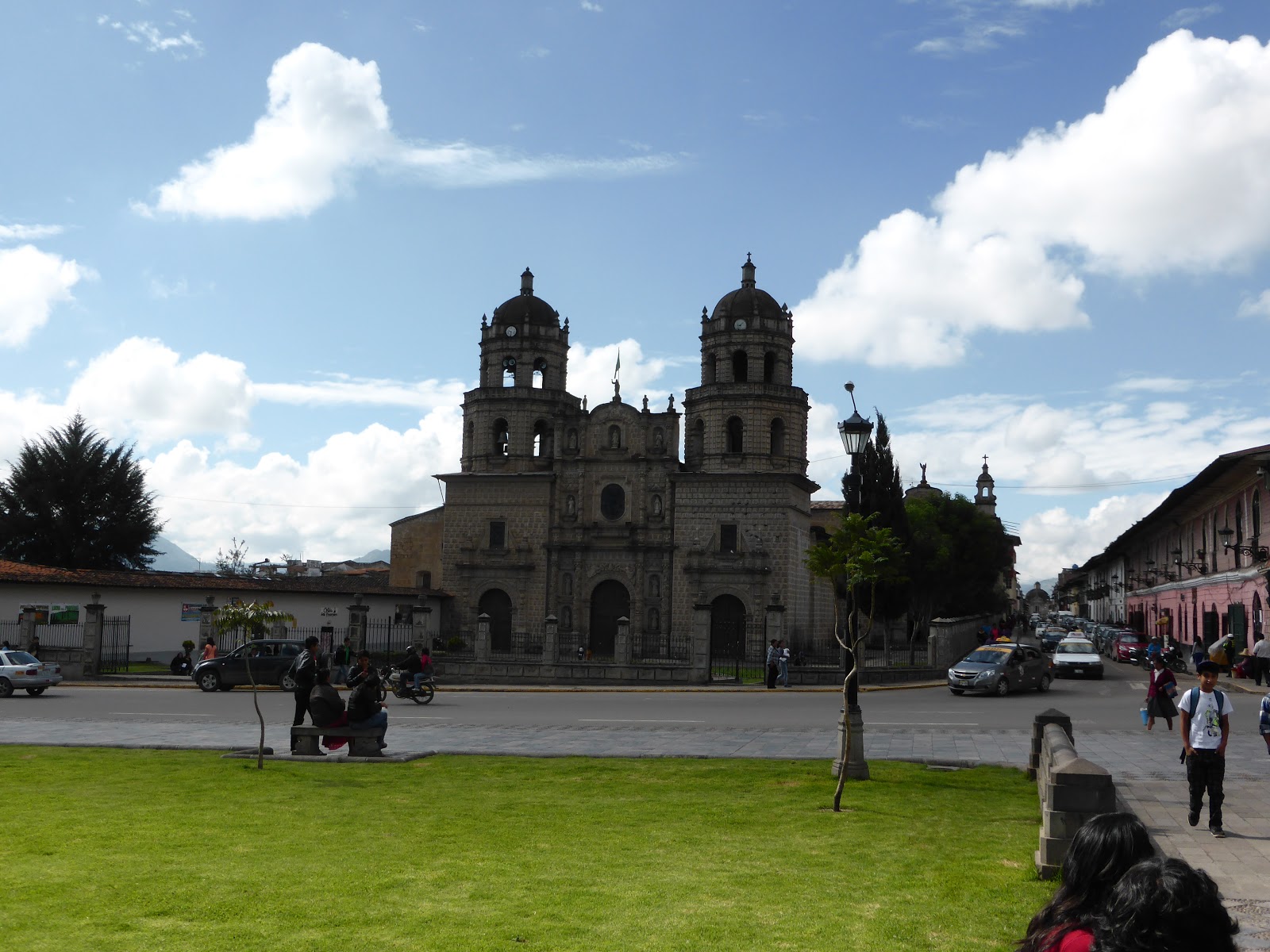
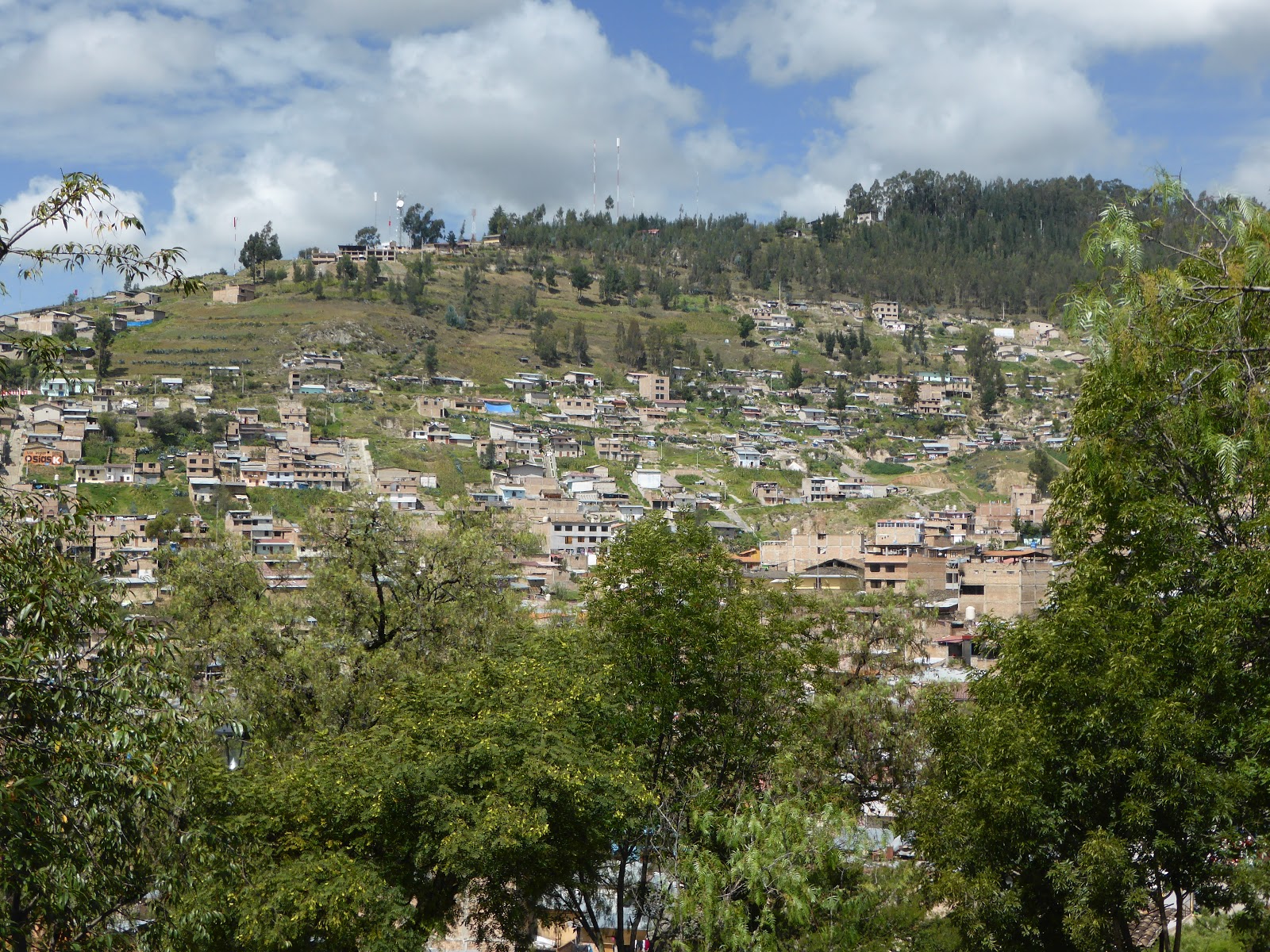
Looking back at Cajamarca

My bike doesn't have a fuel gauge, so I fill it up to the brim, knowing that I then have around 320 kms (200 miles) before my next petrol stop, so generally fill up at the beginning of every day no matter how much there is in the tank - although I am carrying a spare gallon (US gallon, that is, so around 100 kms worth) I am still uncertain where I can get my next fill. Many places along the route are little more than a few houses, and some have signs outside advertising fuel, though they don't have pumps but rather fill from a jug using a funnel, and the petrol grade is usually the lowest, so I am relieved that I never needed to use these. I only ran out once during my travels, and it was actually intentional as I was trying to ascertain exactly what my tank renge was, and knew they were regular petrol stations along the stretch of road I was on (not on this trip).
About 40 minutes out of Cajamarca I came across a barrier across the road - "road closed"! A worker approached and told me that the road was closed until 11.00, which was over 2 hours away, and since I had a long ride ahead of me was worried that this would mean I didn't reach my next stop until after dark. I asked if there was a way round this, and 2 policemen who were in a car next to the barrier came over. This was my first experience with roadside police, and many had warned me that they generally found fault with your bike (or car) and "fined" you on the spot, or rather accepted "plata" (silver) to let you continue on your way - however these two, like every policeman I met on the road, were fascinated to see a "gringo" alone on a motorbike, and after shaking my hand and exchanging pleasantries, told me I had passed a detour a kilometre or so before, and this would take me round the roadworks.
I didn't recall seeing any roads leading off this one but turned round and went back downhill, but saw nothing from this side for over 2 kms, so turned around again, and soon came across a small arrow on a post, pointing to a dirt track! I followed this arrow and soon was very pleased I was on an off-road bike as the "road" was more like a farm track across a field.
The views along the "detour" were nice


In places spectacular
Soon I reached a better dirt track, but there were no signs of any sort, and I wasn't really sure I was going in the right direction.


I passed a few forks in the road and decided that the more travelled route was probably the principal one, but twice they led me up farm drives, so had to back-track, but than came acros this:
Trench across the road
there were two men digging this trench across the road, completely blocking my progress. I must admit that I had a few seconds of manic laughter, before they rushed off, cut a couple of trees down and constructed a makeshift bridge for me - and also told me I was on the right route! A little further along I saw my first "desvio" - detour - sign, and you can see in the photo that not much traffic had been along this route before me!
Finally came across a detour sign showing the way
As I followed the road the gravel gave way to larger stones, and then mud, and the realisation that had I been in a car or a road bike that I would not have been able to get through this "detour" the police had sent me on. Eventually I came to a larger village, but there were several routes through this, and no signs again, so I stopped and asked and was pointed along one of the roads, which led me to a "main road" - but this main road was dirt, albeit wide and in very good condition. I had no idea where I was, or which way I should turn, as I had been expecting to get back onto the tarmac! Fortunately there were a couple of men sitting on the far side of the road and they called over to me, and indicated I needed to turn right for Celendin - this was, in fact the main road between Cajamarca and Celendin, and the roadworks were part of the resurfacing with tarmac, something not shown on my maps!
The dirt road was in good condition, and I soon reached the start of the tarmac - I had spent about 45 minutes navigating the detour, but it had saved me waiting well over 2 hours at the roadblock, so well worth it. I soon got my first glimpse of Celendin 
Celendin - nestled in the mountains
I needed to make up time, so just paused to fill up my tank and left Celendin behind
The twin-spired church is quite a landmark
and soon got my first glimpses of the Maranon River canyon - deeper that the Grand Canyon in the USA, and my route was taking me right through the middle of it!
First glimpse of the Maranon Canyon with the Maranon river upper centre

My route was going to take me along the side of the canyon ...

... then zig-zagging down to the bottom
Fortunately traffic was very light - I may have seen 20 vehicles the whole day - as the corners were tight, and the road in places very narrow, but I do know that buses ply this route, so was lucky not to come across any. My progress was quite slow, not because of the road conditions - as well as a multitude of hairpin bends there were places where the road surface was badly pitted from previous rockfalls, and landslides - but because of my frequent stops to take photos, as it was so spectacular!

The river valley is very fertile so plenty of agriculture

Part way down looking back - the "lines" are the road I had travelled down tracking back and forth across the mountainside!

Still a long way to go down
At the top it was quite chilly, even though it was a bright sunny day, as I was at over 3000 metres above sea level, but as I dropped down the canyon it got progressively hotter, and I had to remove my warm jacket for something lighter.
An example of one of the many hairpins


Road snaking away into the distance
Between the tight hairpins there were stretches of beautiful road, perfect for biking - long gently curving straights, and even with the knobbly dirt tyres I was enjoying the ride!
Finally got a sight of Balsas, down at the bottom and the Maranon River

A few twists and turns later I was on the banks of the river!
It was almost oppressively hot down at the bottom - the canyon is one of the deepest in the world between 2600 and 3000 metres (8000-10000 feet) deep - so apart from a brief rest to eat a snack bought in a shop, I was ready to continue, also very aware that I still had quite a long ride to Chachapoyas ahead of me. I had now crossed into the Amazonas province.
Climbing the other side of the valley with Balsas in the bottom

... and my route out ahead of me

Balsas - and behind ...

... a close-up of the route I had taken from the top of the photo!

Had to keep stopping to take pictures of the spectacular scenery
As I climbed out of the canyon it was getting much colder, so I had to put a heavier jacket on again.
Oli on the way out of the canyon, showing how narrow the road was in places!
The clouds were also closing in, and rain could be seen sweeping across the canyon
On the way out of the canyon I rode through several light showers, and with the cold it wasn't that pleasant, but kept drying off between the rainshowers.
Part of my route clearly visible below

Almost through the canyon, with Balsas a speck at the bottom
The clouds were getting quite thick now

Here at the highest point on my trip - around 4000 metres (13200 feet) it was also a little misty
I still had around 100 kms to get to Chachapoyas, and was feeling tired, sore and cold - the detour had taken more out of me than I thought. The showers, that I kept riding through, were not that pleasant either, and though my clothing was of the sort that dried quickly, it did mean that I just wanted to get to my destination as quickly as possible. The soreness was caused by the fact that the saddle of the bike is not really designed for touring, being narrow and quite firm, so I was having to make regular stops to stretch my legs - about every 10 minutes by now! Fortunately the road between Leymebamba and Chachapoyas is pretty good, so though it was wet in places it did mean that I could travel at a reasonable speed, and finally arrived in Chachapoyas over 9 hours after I had departed that morning! I vowed never again! Distance travelled was only around 340 kms, so a little over 200 miles, but the detour, and the twists and turns through the canyon had been tiring, though incredibly spectacular. It was one of the hardest days I have spent on a bike, but also, due to the beauty of the countryside I travelled through, one of the best rides of my life!

Friday, 7 September 2018

The Grand Tour - Part 2 - Cajamarca

I got a great breakfast in the hotel - many lodgings in Peru either do not serve breakfast, or it is minimal consisting of fruit juice, coffee or tea, two bread rolls and some jam. This means you have to find somewhere (like a bakery) for your breakfast, and there you can get a variety of breakfasts for every taste, like the Americano, which is juice, coffee, eggs, bread rolls and jam, for around 10 soles (£2.20).
The hotel I stayed in


I then rode into the middle of town to explore the centre of town. At 2750 metres above sea level Cajamarca has a pleasant climate, warm days and cool nights, and is a major farming centre, particularly for dairy products, but is also steeped in history, with many colonial buildings.


I then made my way up to the Mirador de Santa Apolonia, a viewpoint giving panoramic views of the town.


I actually found the mirador by accident - I was looking for the road leading out of Cajamarca to a different location, and passed this, so parked up and enjoyed the views. 2 scruffy-looking young boys approached me and told me it was traditional for visitors to give them something in exchange for them singing a welcome song - but lost interest when I called their bluff!
After enjoying the view I continued looking for the road out to Cumbemayo, but every winding street I took led to a dead end - Google maps had let me down here! I eventually asked someone, and the second person explained the route out, but I still had to stop someone else for directions the following day when I set out, and the road I was on would not have been suitable for a car to pass!
The dirt road out of Cajamarca zig-zagged up the steep mountainside, but afforded some spectacular views looking back
Cajamarca, centre left, nestled below in the valley

The dirt road was not in very good condition so I was riding carefully, but I finally came to a junction - and no indication of which way I should go! There was no-one around, and I had seen little traffic, and both roads looked equally well used so I took the left-hand fork, which as it turned out was the wrong one. The road was as bad as before and I soon came across a loaded truck approaching from in front of me so pulled to the side to give him room, and noticed that my carriers were hanging off! One of the two welds on each side had given way due to the bumpy road. Fortunately I was carrying several bungee cords, so managed to lash the carriers back in place, but decided I needed to return to Cajamarca to get this fixed.
Cumbemayo is a local archaeological site, some 3500 years old, famed for petroglyphs, so I was rather sad at not getting there, but did see some of the rock formations from a distance.


My descent back to Cajamarca was very cautious - I was worried the second brackets would shear too, so very gingerly made my way down the mountainside, cursing the welder in Huanchaco and myself for not insisting he had strengthened the welds! Fortunately not very far from my hotel I found another welder - and this time explained exactly what I wanted, though we had to go and find a scrap metal dealer for a section of flat bar to weld across the original bike carrier. It meant that where before the pannier boxes had 2 flimsy welds attaching the bracket to the carrier, the new brackets were welded right across the top of the carrier, and weren't going anywhere! I decided to call it a day and explore some more the following day.
The hotel I was staying at was on the road to Los Banos del Incas, thermal springs, much frequented for centuries by Peruvian princes, so I decided to check them out the next day - well, I visited the part of town they were in, but was a little reticent about bathing in communal waters, with concerns about hygiene, so gave that a miss.


The area is very tourist-orientated, and appears quite affluent, which I suppose reflects the royal past. I spend a few hours wandering round the area then looked for somewhere for lunch. Midday is the time Peruvians have their main meal, but I was looking for a snack so it took a while to find a small eatery in one of the back streets. I ordered a special sandwich, which was ham, bacon, egg and cheese, with chips and a fresh fruit juice to accompany it. After a short wait the juice and sandwich arrived, and the lady disappeared once more in the back. While I waited for the chips I looked at the sandwich, which looked a little "light", and saw there was no bacon in it - so after a few minutes I went to the rear of the small cafe and called out for attention. The lady appeared, so I asked about the chips - "Oh, we have no potatoes", so I asked about the bacon - "Oh, there is no bacon either"! The "mixto" sandwich was good, however, and I wasn't charged for the missing "extras".
I rode back into Cajamarca centre, had a short walk round, to see if I had missed anything and then returned to my hotel, which was extremely pleasant. The restaurant was excellent, too, and the food as good as any I had eaten in Peru, and reasonably priced. 
My time in Cajamarca was up, and tomorrow I would head to Chachapoyas - I was really looking forwards to that, as I had been there before by bus, and was travelling through the Maranon River canyon, which is deeper than the Grand Canyon in the USA.


Thursday, 6 September 2018

The Grand Tour - Part 1 - To Cajamarca

Now I had the bike ready I felt it was time to do some serious touring, so I armed myself with a 2014 road map, which was actually a guide showing things to do around Peru, and planned my trip. Not knowing what to expect once I left the Panamerican Highway as information on Peru is sadly lacking as not many people do such trips, especially solo on a motorbike, I decide to plan conservatively - shortish daily rides under 400 kms (250 miles) and to book my accommodation in advance. I had no wish to arrive in a strange place and then have to start looking around for somewhere to stay and park my bike safely, so the hostals (Peruvian spelling - something between a hostel and a hotel) had to have secure parking, single rooms, and preferably en-suite facilities.
I had used Booking.com before so this was my starting point - and I soon realised that several of the lodgings mentioned in the map guidebook didn't have a web presence, and weren't on any booking website either! This limited my search considerably, and though there were maps on the booking site as I didn't know the towns I wasn't sure how safe the areas were, or how accessible they were! I also used Google to research some of the places, but again several hostals claimed websites that they didn't have, so again it was no easy task. Eventually I had planned my whole trip! I had booked stays of varying lengths in 4 towns, including a few days here and there for sightseeing, and left my return journey open at this stage.
With the carriers securely bolted on, a gallon of petrol in one of them, I strapped on my bags, and set off! The Panamerican Highway is, for the most part, in pretty good condition, but it is so boring riding for mile after mile through the Peruvian coastal desert - miles and miles of sand in both directions, with tantalising glimpses of the Andean foothills to the West, but once I reached Pacasmayo, about 100 kms into my journey, and turned inland it got a lot more interesting!
First sign of green - rice fields
The Pacasmayo district is renowned for rice growing, and the incredible green was a welcome diversion after the dusty sand  landscapeI had travelled through so far, and soon I started climbing off the coastal plain. I passed a huge lake, which I later found was a reservoir for irrigation of the rice fields, and stopped close to it for lunch - fried freshly caught Tilapia from the lake!
Gallito Ciego Dam


The road was in pretty good condition, and traffic fairly light, though I did come across a lot of quarry lorries travelling slowly, heavily laden with rocks mined for the other thing the area is famous for - cement! I came across my first one-way bridge, with a man at either end with stop-go boards, though they didn't indicate for me on the bike!
Overhang cut in the rock on the approach to the bridge

Pretty bleak looking near the bridge

This bus was actually on the wrong side of the road - under the overhang - to get a good angle for the bridge

Wooden planks made up the bed of the bridge

While I was stopped here my phone rang, and I saw I had missed two other calls - it was my hotel calling to ask when I would arrive. I had no real idea, but said I thought I would be there by about 16.00, and they said they would meet me, so how was I arriving! Most foreign travellers come by bus so it is commonplace for the accommodation to send someone to meet the bus and take them to the hotel, but I explained I was travelling by bike and so they offered to have someone meet me on the main road as they said they were a little out of the way! I had a map, though, and wasn't sure when I would get there so didn't want anyone waiting for a long time, so said I would try and find my own way but call if I got lost!
The road started climbing seriously after this 
Riverbed near the bridge
I was headed up into the clouds in the distance, but Oli (the bike!) took everything in its stride and never missed a beat.
From the top looking back - I had travelled along the valley below!
I finally arrived in Cajamarca, and more by luck than judgement as street names are not that common, and the one-way system (grid system with alternating streets one way on opposing directions!) designed to catch out the unwary, I found the hotel quite easily. It was quite expensive by Peruvian standards, but my research had shown it as one of the few options with parking on-site, and it was close to the route I needed to take out of Cajamarca for the next leg of my trip - and at just over US$100 for the 3 nights, including breakfast, it was still reasonable, and was very luxurious! It was quite a way out of the centre of Cajamarca where all the restaurants are, but they had an excellent restaurant in the hotel, and those prices were cheap, so I ate in every evening I was there.

Distance travelled 320 kms - 200 miles.

Getting ready to travel

I realise that I haven't really kept this Blog up to date - I tend to post new stuff when something occurs to me, rather than in any chronological order, and I haven't worked out how to/whether I can organise the posts, so it is a bit higgledy-piggeldy.
Back in 2014 I bought a new motorbike in Peru - which I posted about at the time - the intention was to use it to visit out of the way beaches here for fishing, but I soon realised that it was better than I anticipated, and decided I would try some touring on it. The engine - 250cc - was powerful enough to maintain decent speeds on good roads, but one concern I had was fuel capacity. It only had a 12 litre tank, which would take me around 300kms, and I was unsure about frequency of petrol stations in the remoter areas, so felt I needed to carry spare fuel with me - the problem being how to do this.
Ronco Demolition 250
Being what they call a Todo Terreno (all-terrain) bike it wasn't really designed for touring, and accessories like panniers almost impossible to come by here, so I decided to see if I could have a custom-made carrier built so I could securely carry a jerry can of petrol. I found a local welder and drew some scale plans, and took along the jerry can when I met him for the first time. I wanted the carriers to be detachable, so for town use I wasn't hampered by the wider boxes attached, nor the additional weight, and explained all this, as well as it being written in my design spec. He wanted me to leave the bike for a few days and return later.
When I went back work was well under way, but it was obvious that he intended to weld the twin boxes directly to the rear carrier, which I didn't want - so eventually he agreed to make a detachable bracket so they would be bolted into place when needed, though when I saw what he had done had serious doubts about the strength of this. He had spot-welded the mount to the bike's carrier, which was made of metal tubing, and, although I am no engineer, I had concerns about this, but he assured me he was an expert and it would all hold together. It was not quite "square" - on one side the mounts were a centimetre or so shorter than the other - but it felt solid, and looked as though it would serve its purpose. The idea was to have the jerry can one side, and some essential tools the other, with my bags strapped to the seat behind me.
Fully loaded and on the road with carriers!
I did a test run locally to get the feel of things and then started planning my first adventure!

Wednesday, 29 August 2018

When life gives you lemons - make Caipirinhas!

Back in 2008 life seemed to be going well - I was 8 years into a job I really loved, and seemed to be making a real difference there, too. OK, I was working too many hours, but enjoyed it so much that it didn't seem to matter. My marriage hadn't survived the move to this job, even though it had appeared to be a lifesaver to us both at first, but circumstances meant that I was the one to petition for the divorce, which had been finalised 2 years previously. Walking away from 19 years marriage had been easier than I thought it would be.
Since I started there I had been working with one major handicap - I didn't have an assistant who was capable of running things when I wasn't around, nor willing to make decisions themselves, despite all efforts to empower them. The association (it was a large charity) decided that we didn't need an assistant manager as this would entail paying a lot more, so I simply had a "centre assistant"! It was a nothing title, and didn't even explain what that person did, and none of the people who came and went from that role liked the title - and despite trying to get it changed the committee I answered to refused to move on it. It meant that the people employed as centre assistant didn't feel valued, were not paid enough to take responsibility, and I ended up having to work harder to cover the slack.
At the end of 2007 it all changed. The current centre assistant left after only a few months, due to an unexpected pregnancy, and finally the association decided we should look for not one, but two, replacements (business was also expanding so we needed additional staff), and to give them a worthwhile title - so we advertised for an Assistant Manager, and an Activities Manager (we were a residential outdoor activity centre), and received a much higher calibre of applicant, and duly appointed two very capable candidates.
The association had employed an expert to do some staff training for us, and in conversation with him we had all expressed concerns about the hierarchical chain of command. We had a management committee that we reported to, and I was on that committee, but it had no power - so any decisions we made about the running of the centre had to be passed up to a finance committee, and then to the executive committee for final approval. We met quarterly, but the other committees only twice a year, so the process was very slow, and if they wanted clarification, or changes to our suggestions, it came all the way back and started again. The expert suggested to the association that he could do a review of the system as it appeared flawed, and he felt particularly that the lowest level management committee needed some teeth as it was powerless at present.
We were all excited at the prospect of streamlining the decision making process, and getting plans executed faster, but just after the review started - mid 2008 - we were told that all the current jobs were also under review and there would be changes to all our roles! This was a big shock, as we had all though the review was going to be on the committee structure, and not on the whole staffing structure, particularly as we had just changed things round with the previous recruitment drive.
The result was that they put in a temporary management group, and came up with three new job titles - Centre Manager (which had been my title), Assistant Manager, and Property Manager. They produced the job descriptions and personal specifications for the three posts, and told us we were all eligible to apply for the new jobs! The new Centre Manager job had to have (essential qualities) a degree in Business Administration, and the Assistant Manager had to have (also essential qualities) a teaching qualification, while the Property Manager didn't require any formal qualifications. Surprise, surprise - my former Assistant Manager had a degree in Business Administration, and the Activity Manager had a teaching qualification - while I had no "formal" qualifications,
We were all called in individually and asked which "new" job we would like to apply for - and I pointed out that among the three of us it was clear which roles they had in mind for us since only one person was qualified for either of the two top positions, though they strenuously denied that this was the case, and I could still apply for my old job! I pointed out that I did not have the "essential" qualification needed for either of the two most senior posts, so was basically excluded from applying for those. It was obvious that they had tailored the roles for us in a specific order, but no-one would admit that, or even talk to me - who had been their centre manager for some 7 years (I had a different role with them in another building previously for over a year) - about it.
My job as manager had included free on-site accommodation as part of my "package", which was considered essential as part of the caretaking role, and having someone on hand for emergencies. The new role of Property Manager, which I reluctantly accepted and started early in 2009, was at less than two thirds of my previous monetary salary, so they agreed to include the accommodation in exchange for regular caretaking duties, emergency call out responsibility (we had been supposed to do that in rota before, but since the others lived 30 minutes or more from the property it had all fallen to me!), and as a goodwill gesture!
However almost immediately they informed me that they felt a "caretaker" was no longer needed - this in the same week that I had responded to a (false) intruder alarm, a group turning up to use some of the facilities and no-one leaving a key out for them, and accosting a dog-walker who had wandered onto the property - so were revoking the accommodation offer.
I explained that financially I couldn't afford to accept this, so they offered me redundancy instead - but I also sought legal advice regarding constructive dismissal since they had made changes to my contract of employment making my position untenable! This could all have been avoided if someone from the association had respected my original position of manager and taken the time to talk to me and explain what they were doing, but at no time did anyone, or would anyone, tell me what was going on.
I received a settlement as well as my redundancy payment, which also included free use of the on-site accommodation (a separate cottage) for 6 months as I had nowhere else to live. So ended over 9 years, very successful years for them, relationship between us, leaving me completely in the dark about why it had all come to this - and to this day no-one has clarified this, with even the chairman of the management committee, who was a personal friend, unaware of what the thinking behind it was.
There I was at 56 years of age, unemployed, and with no home of my own. I had fallen into a period of mild depression during the final weeks, so as soon as my final payment came through I decided to visit my nephew in Brazil - I needed to get away and clear my head, and also at the back of my mind was the thought that maybe I could make a new start in Brazil. I had been applying for jobs before I went, though nothing suitable for a 56 year old, with no formal qualifications was turning up.
I had a great time in Brazil, though Salvador (the capital of Bahia state) was too big, too noisy (though I was there during one of their regular festivals), and not that appealing to me anyway. I made a couple of trips, and fell in love with the Chapada Diamantina National Park, some 400 kms away. But, too soon my holiday was over and I returned to job-hunting in the UK.
While sending out some of the 150-plus applications I submitted, I was also wondering what the possibilities were of moving to Brazil. The cost of living was much lower, the climate very agreeable, but job opportunities for a 56 year old foreigner with no formal qualifications about as remote as in the UK - at least legal ones, since numerous foreign tourists simply stayed and worked off the grid (i.e. no taxes and low pay rates). As it turned out I only received 3 replies, all in the negative, from all those applications, and was shocked that so many companies did not even have the courtesy to respond - all the applications were in response to adverts, either in the press, online or at the Job Centre, so I was not "cold calling" them.
I remembered that the hostel I stayed in while in the Chapada Diamantina ran a children's charity, so contacted the owner to see if she would offer me a 2-year voluntary role helping there, which she jumped at. A volunteer visa allowed a 2-year stay (well, one year renewable for the second year), and I hoped that this would give me time to sort out some sort of permanent residence. So I started taking a TEFL (teaching English as a foreign language) course, and trying to get all the required paperwork for the visa - which was much, much harder than I expected!
I was still applying for jobs, and took on some temporary work - 2 contracts - though this didn't amount to much, but also planning my move to Brazil bearing in mind I had to vacate the "free" accommodation in November 2009. Because I would have no income as a volunteer and not that much in savings, even after my redundancy settlement, I cashed in my 2 work-related pensions (though I had only worked for the two companies some 15 years in total so it didn't account for that much) and the endowment policies (taken out to cover the mortgage on the marital home that my ex-wife kept as part of the settlement), primarily because I was still paying into them, and it seemed better to cash them in to purchase an annuity, giving me a small regular monthly income for the rest of my life, rather than keep paying into them. The annuity I took out guaranteed a fixed income for the first two years, so I knew how much I would have coming in, but after that I was hoping to have found a more permanent solution.
By the time November came round I had submitted my first visa application, but it was returned as some of the paperwork - from Brazil - was missing! I decided, however, that I couldn't wait indefinitely so moved to Brazil late November, intending to get the rest of the missing paperwork and return in the New Year to try again! The very nice lady at the 
Brazilian Embassy in London, had been very understanding and was holding onto my papers (I had copies!) pending my return. I placed some personal belongings in storage, hoping to be able to ship them out to Brazil once I had achieved some sort of permanence, and flew out to my new life.
Upon arrival my first priority was accommodation - I had managed to book a "kitinet" - basically a bedsit - before arrival, but could only stay there a month as it was booked out for Christmas, a very busy time in the National Park, so immediately started house hunting. Initially a friend of the charity owner was to help me, but after two abortive attempts to meet up after we had met first for a meal, I decided to use a local agency, and was shown several properties in the centre of the small town. Some needed too much work, some had potential, but none had parking space or even a yard, and none of them had full legal title available (which apparently is very common in Brazil!), so the following day I was taken a little further afield - still within the town limits, but away from the centre. Two of the properties were unfinished - they knew I needed to move in urgently! - and a third had great potential as it was in two separate storeys and there was the possibility of renting one out, though the top floor, which had gorgeous views, was again unfinished, and wouldn't have been nearly as nicely appointed as the ground floor! The final property I was shown that morning was a vacant 4-bedroomed house on a 690 sq m plot, with garden (very overgrown) all round, though it had a beautiful view from the kitchen window. It was finished to a good standard, and just needed a coat of paint, and some minor repairs (bug screens were all torn) to be habitable, and amazingly also had full legal title, but I felt was far too big for me, and at the limit of my budget. Bear in mind that small properties in town could be bought for under £5,000!
We returned to the agency office and the agent was checking to see what we could view that afternoon, when someone came in and asked about available rentals. The final house I had looked at was one of their potential rentals, too, and the lady was quite interested, but they asked me first since a sale is better than a short-term rental! It took me about 30 seconds to make my mind up, and I bought a house! The price was far less than a one-car garage in the UK would have cost me, and I paid cash from my redundancy money! It was much bigger than I needed, and a little more expensive than I was initially looking to spend, but the fact it was ready to move in and needed no expensive work doing, meant that it was in fact a good investment, and probably cheaper than many of the others would have been factoring in repairs, and possible legal disputes later on.
I paid a 50% deposit by bank transfer and we started the title deed transfer process, but it became apparent that this would not be complete by the time I had to vacate the bedsit and by then the town was booked out for Christmas (bear in mind it is mid-Summer in Brazil that time of year), so I approached the seller and asked if it would be possible to move in early, and they agreed without any problem - one of the advantages of being a gringo is that they trust you much more than they would a Brazilian. plus they did have half the asking price!! So I immediately started looking for furnishings, bought some paint, some new mesh for bug screens, cleaning materials, and started preparing to move when my rent expired. I moved in on December 23, 2009, after a few false starts on getting the furniture - some shops didn't deliver to the area despite assuring me they did, and the one who I bought most from missed the delivery day (truck got a puncture!), and finally arrived 3 hours before I was due to leave for Salvador to return my hire car, three days later! Much of the furniture arrived flat-packed, and part of the deal is they assemble on delivery, so I had to forego that and do it all myself upon my return!
So after spending the previous 30 years paying off a mortgage (as we moved "up" we renegotiated the mortgages) I was finally living in my own house - paid off in full (well, it was less a month later when the deeds were finally signed and transferred), with no debts, living in one of the most beautiful places I had ever been to - and about to embark on a two-year stint as a volunteer, and feeling more relaxed and contented than I had for years - my only regrets were that my elderly mother and 22 year-old daughter were 5,000 miles away! It did take me a further 6 months and 2 trips back to the UK to finally get my volunteer visa, but nothing then could take away the peace I felt in my soul.
The reference in the title? The Caipirinha is the national drink of Brazil and consists of Cachaça (a sugar based spirit), sugar, crushed ice and ... lots of lemons!

Saturday, 11 August 2018

Membership of a Trade Union

In the mid-80's I was working for a supermarket in the UK as a Bakery Manager - they were making "bake-off" bread (part baked, rather than made from scratch) and other bakery products so the department didn't need highly skilled bakers, however right from day 1 the bakery was understaffed, and despite numerous pleas for additional staff I was the one making up the shortfall in hours every week. The bakery was never fully staffed (it was a brand new store and the bakery was only 75% staffed from the start), and every time Human Resources advertised for staff, the store manager vetoed this saying we didn't have the funds available, then she would take me to task for working too many hours! After about 6 months of this I decided that the time was right for me to leave so handed in the required (per my contract) 8 weeks' notice. No-one spoke to me about this or asked about my reasons for wanting to leave, so I simply went about my duties as normal. I started looking for other work, but as I had 8 weeks I wasn't initially looking that hard, but the day before the first 4 weeks were up the store manager came into the bakery and told me I could finish the following day!! She said that as I hadn't completed 6 months' service when I handed in my notice I only needed to give them 4 weeks, not 8. There was nothing in my contract stating this, and the HR department also appeared unaware of it, but 24 hours later I was unemployed!
A close friend and neighbour told me that Crane Freuhauf, an engineering company nearby that he worked for, was looking for temporary workers, so I rang them and two days later was granted an interview. The production manager looked at my CV, looked up at me, and asked what engineering skills I had. I explained that, as my CV indicated, I had not worked in engineering before but had reasonable DIY skills, so he opened a drawer and produced a screw, and asked me what I could tell him about it!! I said it was about 2.5c ms long, stainless steel, possibly a size 8, right-hand thread, and required a Phillips screwdriver - which seemed to satisfy him, so he offered me a trial, and asked me to come back the following Monday.
About 50 of us were ushered into the conference room and told that we were being taken on as temporary workers for a period of 13 weeks (the Conservative government had recently announced a job creation scheme and any business who employed new staff for a minimum of 13 weeks received a subsidy equivalent to part of the wages!), and that we were all on 2 weeks probation. He read out our names and the departments we were being allocated, and I was going to be on the main assembly line, however the door opened and the welding supervisor came in and said that some of his new workers had not turned up so he took 5 of our intake to train as welders (all who had some welding experience, but needed to be shown "our" system!), meaning some of the remainder of us were reassigned, and I was placed in the machine shop!
The next part of our induction (which lasted only one morning!) was to meet the shop steward, who said that we should all join the Trade Union (AEU - or Amalgamated Engineering Union), which would cost only a pound or two a week. One of our number was a former shop steward himself, so asked what benefits we, as temporary workers, would receive from our membership - and the shop steward blustered a little and mumbled "well, nothing", but went on to say that the full-time workers would not be too happy working alongside non-union workers (back in times when unions had more power most factories were "closed shops" meaning that non-union workers would not be employed, but times had changed). A few of us, myself included, decided to join up - I had never worked in a factory before and wasn't sure what it would be like anyway, so thought this small concession might make things easier for me.
As it turned out rural Norfolk was not at all militant, and the existing workforce couldn't care less whether we were union members or not! Nevertheless I was a card carrying member of the AEU!
After 13 weeks we were all laid off, at the end of our "contracts" but immediately taken back on for a further 13 weeks! The industry had natural "breaks" so it was a week-long shutdown, but many of us (full-time employees too) worked through the shutdown on overtime, so effectively our employment hadn't terminated - but the company still got a new job creation subsidy!
During my second temporary contract it was time for the annual pay negotiations, which the unions undertook on our behalf, and though, despite being union members, the "temps" had no vote on the outcome, but could attend the meetings (held during work hours). That year the company offered us 6% increase (about double the then rate of inflation), and the union representative from our sister factory, some 30 miles away), who was much more militant advised us to hold out for more!! He was at great pains to explain that the Unions could no longer advise that the workers went on strike for a better deal (as that was now illegal!), but he felt that if we, the workers, were to decide on that course of action we could get an improved offer. There were members of company management attending the meeting, and he kept just inside the law in what he was saying, and then asked for a show of hands on the current offer, which the voting members accepted - much to his disgust!!
During my third temporary contract I was offered a permanent job with the company, and as they promised to multi-skill all the permanent staff (including welding training) I felt it was a good move. The pay was not bad for Norfolk, we got 6 weeks paid holiday a year (though at times that coincided with shutdowns rather than when we wanted a holiday) and holiday pay was paid at time and a half. This was a throwback to the days when many factories worked shifts round the clock, and night and weekend shifts received enhanced rates of pay - so being on enforced holiday meant a reduction in pay for that period. Unions, when they had some power, had negotiated that all holiday, to all the workforce was paid at the enhanced rate of time and a half!
When the pay talks came round the following year the company offered us 10%!! That was way above the national averages, and, in my opinion, a very generous offer. There was a catch - they did want something in return! We had an agreement that anyone clocking in up to 3 minutes late would not get docked pay - they wanted to revoke that. There was also an agreement in place that we stopped working 5 minutes before a break (morning tea break, lunch, afternoon tea break and end of day) to "clean up" - they wanted to stop that, too. Finally because we worked a 39 hour week this was 4 x eight hour days, and Friday was only 7 hours, and there was only one hour between tea break and end of day - they wanted to stop that too.
Before the meeting there was much discussion about this, mostly along the lines of "we are giving the buggers nothing!". I spoke to most of my co-workers in the machine shop and tried to explain that we didn't, in fact, have to give anything up! None of us arrived "late" so the "3 minute rule " didn't apply to us, as the machine shop (and in fact most of the production lines) were classed as "hot" areas we could have a drink (from the vending machine, which cost pennies as it was heavily subsidised, or from a flask which most of us also had) whenever we liked, including Friday afternoon - so we were losing nothing there either, though we would have to drink standing at our work stations rather than sitting in the "tea area". Finally the "clean up time" - we could go to the toilet whenever we needed, so what was stopping us from going 5 minutes before a break time and washing our hands! Basically we could play the system and lose nothing in exchange for a 10% pay rise!
The day of the vote arrived and we met again in the dining room - again the militant Dereham branch shop steward addressed us, and pretty much said we would be wise to accept the offer as it was very generous - privately he was echoing what I had said, but not in front of the management!! So we turned it down, and finally settled for 6% with no concessions!
The two occasions I witnessed trade union shop stewards in action the workforce defied them and voted opposite to what they were advising! I only remained with Crane Freuhauf for 2 years - business was suffering (I believe even back then to cheap Chinese imports!) and the company were closing our factory down, and retrenching a lot of staff, and relocating others to the Dereham plant. I didn't wait for the possible redundancy notice and the risk of fighting with numerous others for scant job opportunities in a rural area, but managed to find another job - not in engineering - very quickly.

Wednesday, 25 July 2018

The evolution of my mobile phone usage

I am not, and have never been, a huge user of the mobile phone - but consider mine to be there for "emergencies only" as I travel a fair deal, and sometimes into remote areas in South America (where, as likely as not, there will probably be no signal in any case!). I currently own a "smartphone" but it is an old one (bought in 2012) and the OS is non-upgradeable so most modern "apps" don't work on it anyway, and serves me perfectly in the capacity I use it. My only gripe is battery life!! I have to charge it daily, despite the fact some days it never gets used, and this is actually what prompted to me to make this post, but I will leave that till the end!!
I cannot remember exactly when I bought my first mobile phone, but recall it was on offer at a local supermarket and on the Orange network - it cost the grand sum of £9.99, and I think the contract was £15.00 a month - so I bought one for my wife as well. It was huge! I do not recall the brand, either, so it may have been simply an "Orange" phone. Hardly a "pocket" phone, and I do not even recall if "texting" was possible - the early phones just had a number pad, with 3 or 4 letters corresponding to each number, and you had to tap through to the letter you wanted, so it took ages to type a simple message! It didn't get used very much, in any case.
I moved over to the Vodafone network and got a Nokia 3210 after that - which was, at the time, one of the top phones! Texting was still by tapping through the numbers, but seemed easier though still slower and long-winded. It didn't really affect me, however, as my phone usage was still pretty low, and my texts were almost monosyllabic in those days!
The 3210 was good, but I found it turned itself on in my pocket, so decided I wanted a flip-phone, which would also protect the screen - and upgraded to a Motorola Razr, which really impressed my daughter as it was, at the time, pretty state of the art! I loved it! Battery life was awesome - I could get a week out of it without recharging - the keys were easy to use, the twin screen (small screen on the outside showed caller details before you answered) was great, the camera was good (for the time), and it was just a very good mobile phone.
Then Motorola brought out the Krzr, which was a slimmer version on the Razr, and I upgraded (though my contract) for one of those - and it was as good as, if not better, than the Razr! Being smaller it fit even better in the pocket, and battery life was equally as good, so I was really pleased with the swap. At the time smartphones were becoming the "norm" but I felt I didn't need all the features of those, and since the monthly contract price to get one "free" was more than double what I was paying or felt I needed, I stuck with a "regular" phone.
When I moved to Brazil in 2009 I bought a netbook, so used that for connecting to the internet when travelling - at least when overnight in hostels - so again didn't feel the need to upgrade to a smartphone, and the Krzr still fulfilled all my call and text needs, though I moved to a pre-pay (PAYG - pay as you go) contract as I was unsure of my permanence and didn't want to lock myself into a long contract.
In late 2011 I managed to crack the small outer screen on the phone, not sure how - picked it up one day and it was cracked - and tried unsuccessfully to get a replacement in Brazil, where I was at the time, and considered ordering one from the UK, but since my daughter was visiting the following year I decided to ask her to bring me a new phone, and upgrade to a smartphone!!
I have never been one for following fashions, or having to own big brand names - where style is often at the expense of quality or content - and also have never had the money to throw around updating annually just to have the latest things, even when the old ones are just as good or not worn out. This means that whenever I make a major purchase (and this had to be a sim-free, no contract phone as it would still be on a PAYG basis) I do a lot of online research first to ensure I get best value for my money!
As primarily this was going to be simply a phone, all the other features were incidental - I just wanted something that would make calls and send texts, take the odd photo (I usually carry a good compact camera so the phone's camera wasn't that important), and anything else was a bonus - but battery life was crucial! My shortlist, within my price range, was examined closely and the Samsung W i8150 was streets ahead of the competition in claimed battery life - the Samsung blurb claimed 420 hours stand-by and 120 hours talk-time - and even the independent reviews raved about how good the battery life was! So I bought one, and my daughter duly brought it out when she visited.
We travelled a bit before going to my home so the phone remained boxed up for 10 days and then I followed all the "battery conditioning" instructions before inserting my old sim-card and starting to use it in earnest.
Don't get me wrong it is a great phone - BUT the battery life is terrible! I get around 14 hours out of a full charge - when the phone is on standby and not being used at all! Using it for a couple of calls and texts (or even Whatsapp) don't seem to make any difference to battery life. I did have to change the battery (for another original Samsung one) after 3 years as the battery was "swelling" and my daughter (I was visiting the UK at the time and she is more tech-savvy than me, but I am no slouch!) warned me that smartphones do have a habit of needing regular battery replacements (not a problem generally for those who update every year or so!), but the "new" one is just as bad as the original for battery life.
What prompted me to make this post - back to the first paragraph - is that some days my phone "beeps" to tell me it has low battery (down to 15% left), while others it still has 25% life left at the same time of day when I plug it in to charge - yet yesterday it had 57% left when I plugged it in?? How does this work? The phone gets the same low to zero use every day - I probably make 2 calls a month (yes, a month!) here - to order gas or water - and the rest of the time it sits on a table next to me, so how can one day this equate to 85% battery usage, and another only 43%? I am not using GPS, which I know can use a lot of power, nor do I have it set to seek out wifi - again I have heard that if the phone is continually "looking" for internet connections this can also use a lot of power - so I cannot think of any reason why the usage should be so variable.
I may consider an upgrade soon - or a retro-grade if rumours that Motorola might release a new Razr flip - as the i8150 has another "problem" - the OS cannot be upgraded! It is running Android 2.4, so most modern apps - including some that were factory installed - do not work on it!